Why English-format notarization matters for international use
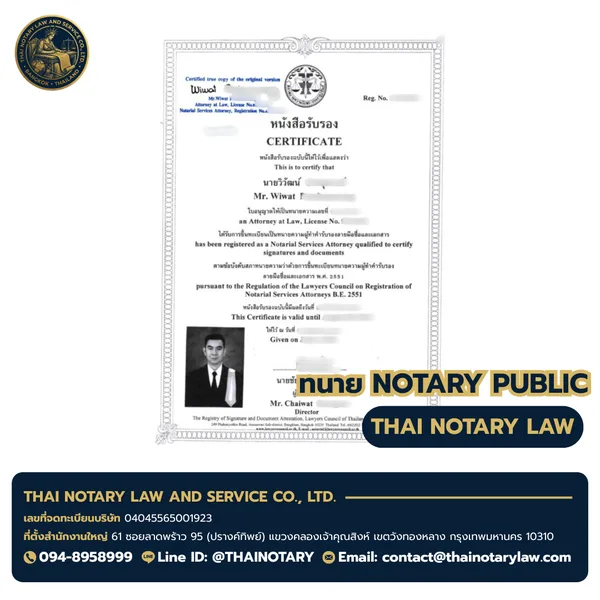
Documents notarized in Thai-only carry a Thai-language notarial certificate that most foreign banks, courts, registrars and immigration officers cannot read or interpret. A bilingual Thai-English notary, by contrast, drafts the notarial block in English using the conventional 'On this … day of … 20…, before me personally appeared [name], known to me (or proved to me on the basis of satisfactory evidence) to be the person whose name is subscribed to the within instrument…' jurat formula, followed by signature, seal, licence number and date. Foreign authorities treat this certificate as functionally equivalent to a US notary public certificate or a UK solicitor's certificate, dramatically smoothing acceptance. Without it, foreign authorities often require an additional sworn translation step or refuse the document entirely.
Five most common English notarization scenarios we handle
(1) Power of Attorney for property transactions abroad — Thai owners empowering relatives or agents to sell, lease or mortgage real estate in the US, UK, Australia or Singapore. (2) Affidavit of identity and support for spouse, fiancé(e), or student visa applications, where the foreign embassy requires sworn confirmation of relationship or financial sponsorship. (3) Corporate signatory verification for board resolutions, shareholder consents and director appointments at overseas subsidiaries. (4) Copy-conformity certification of academic transcripts, professional licences and corporate registration documents for use in licensing applications abroad. (5) Witnessing of foreign-jurisdiction wills, codicils and trust deeds executed by Thai-resident principals — particularly important for HNW clients whose estates span multiple jurisdictions. Each scenario uses a slightly different notarial certificate wording; experienced practitioners select the correct form so the document is admissible on first presentation overseas.
On-site, off-site and remote-witness options
For mobility-restricted clients (hospital patients, elderly principals, prisoners awaiting trial, expatriates at downtown hotels) we offer off-site notarization at the client's location anywhere in Bangkok and the BMR. The fee surcharge is THB 1,500–2,500 depending on distance and timing. For clients permanently outside Thailand who need a Thai-style notarization (typical use case: Thai national living in Australia signing a property POA for use in Thailand), we coordinate with the nearest Royal Thai Consulate for in-person attendance followed by MFA legalization upon document arrival in Thailand. Pure remote-witness notarization via video is not yet recognised under Thai notarial regulations — be wary of any provider claiming otherwise, as the resulting document will fail at the MFA verification step.